9.17.2026
A Good Catch Can Go Beyond Physical Safety
A good catch can protect more than physical safety. Learn how recognizing the signs and checking in can make a difference.
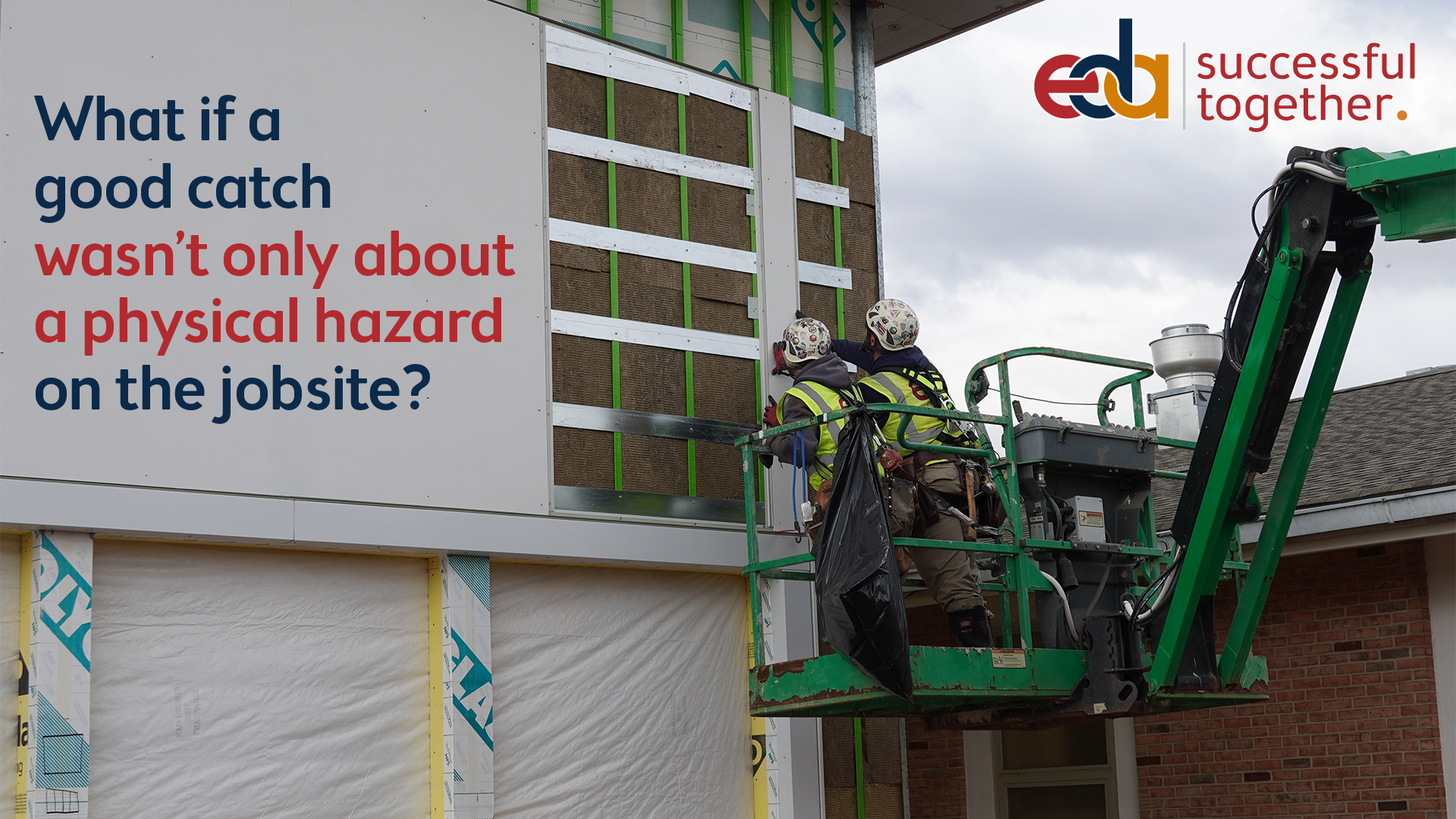
At EDA Contractors, the Good Catch Program encourages employees to notice potential hazards and take action before someone gets hurt. It is a simple but important part of creating a proactive safety culture: pay attention, speak up, and look out for the people around you.
That same mindset can extend beyond physical safety.
Sometimes, the concern is not damaged equipment or an unsafe condition. It may be a coworker who does not seem like themselves.
Signs that someone may be having a difficult time can include:
- Withdrawing from the people around them
- Becoming unusually irritable or frustrated
- Showing noticeable changes in their work habits
- Taking more risks than usual
- Talking about feeling hopeless, trapped, or like a burden
- Increasing their alcohol or substance use
These behaviors do not always mean someone is in crisis, but they may be a reason to check in. Starting the conversation can be as simple as saying, “You haven’t seemed like yourself lately. How are you doing?”
You do not need to have all the answers or know exactly what to say. The important thing is to listen without judgment and remind the person that they are not alone.
At EDA, employees can also turn to PACT, which stands for Personal Accountability Changes Today. PACT helps connect members of the EDA community with support and resources related to mental health, substance use, and other personal challenges. Employees who are concerned about someone and unsure what to do next can also speak with their manager or another trusted person.
A good catch begins with noticing when something does not seem right. Sometimes that means identifying a physical hazard. Other times, it means recognizing that a coworker may be struggling and taking a moment to check in.
Both are part of looking out for one another and keeping the EDA community safe.
If you or someone you know is experiencing emotional distress or a suicidal crisis, call or text 988 or visit the 988 Suicide & Crisis Lifeline. If someone is in immediate danger, call 911.

Ready to begin your next project?