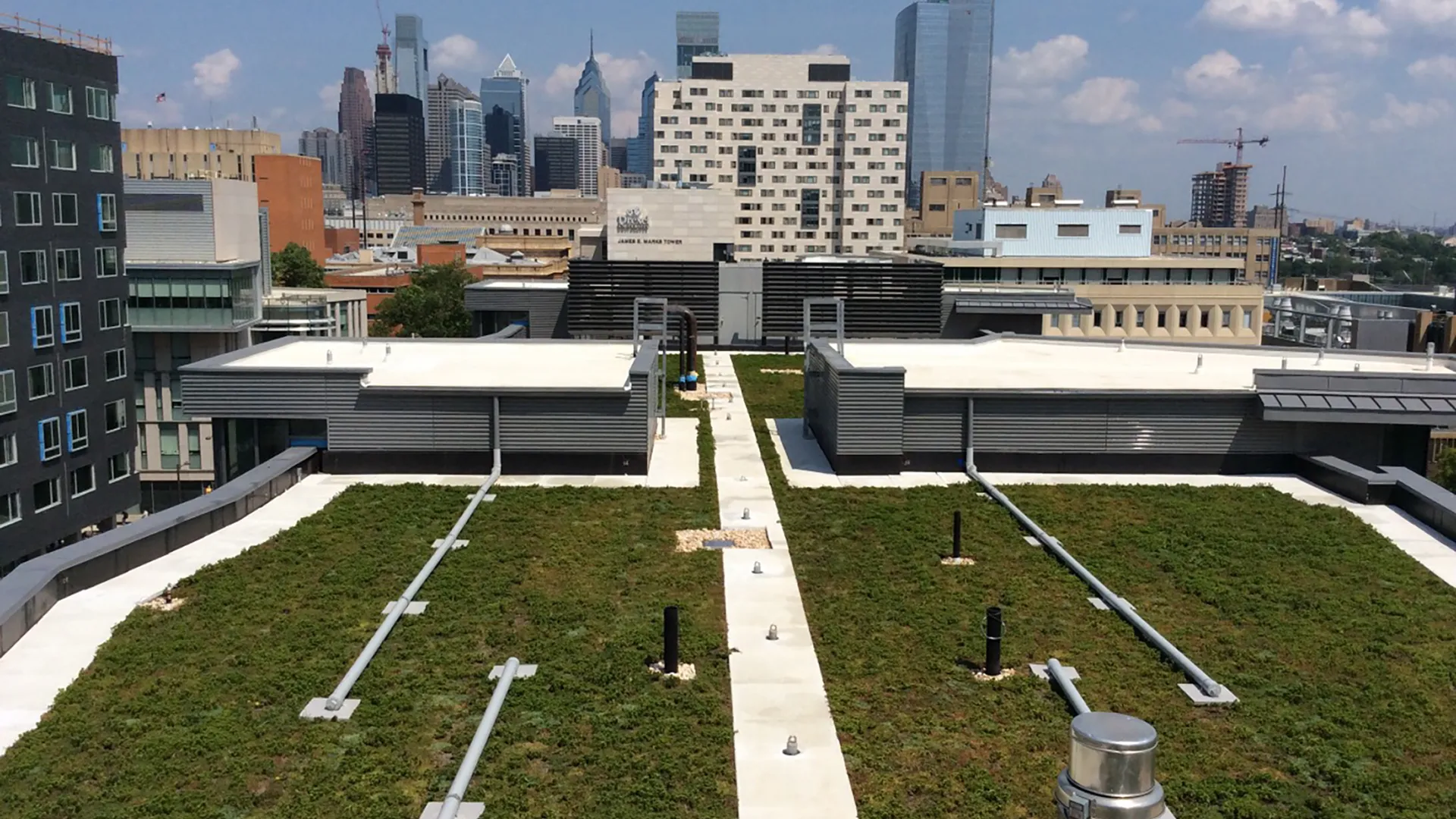
Green roof systems, also known as vegetative roof assemblies, are landscaped roofs using specially designed soil and plantings with the intent to retain rainwater from overwhelming our wastewater systems during heavy rainfalls.
Green roofs offer numerous benefits, from extending the life of the roofing system to reducing the urban heat island effect.
Green Roof Systems
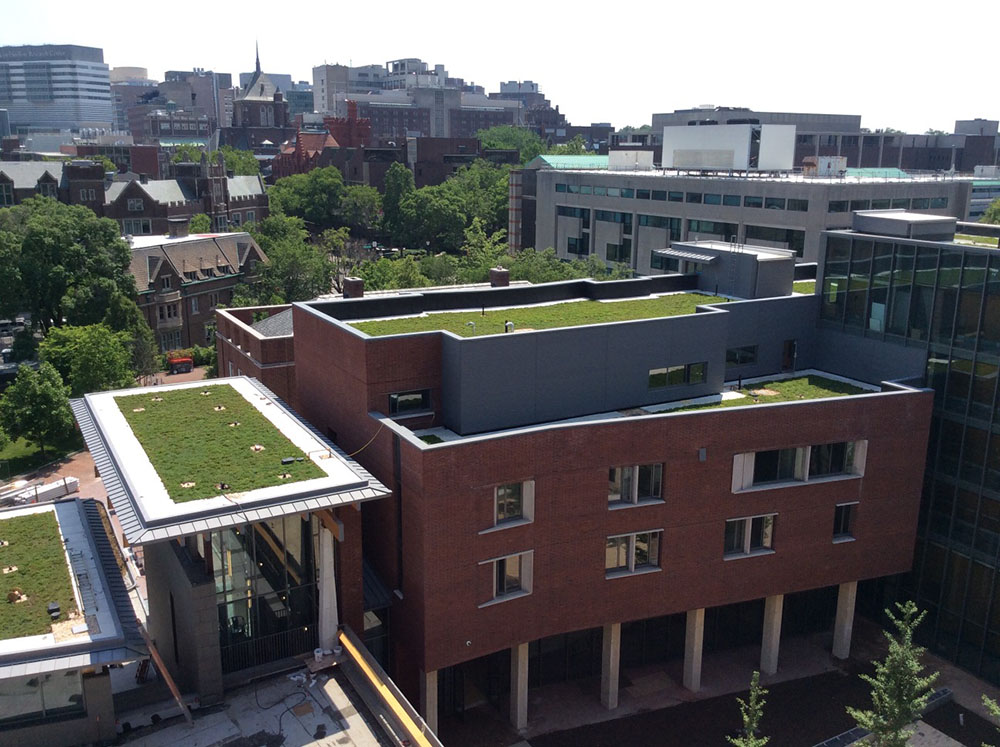
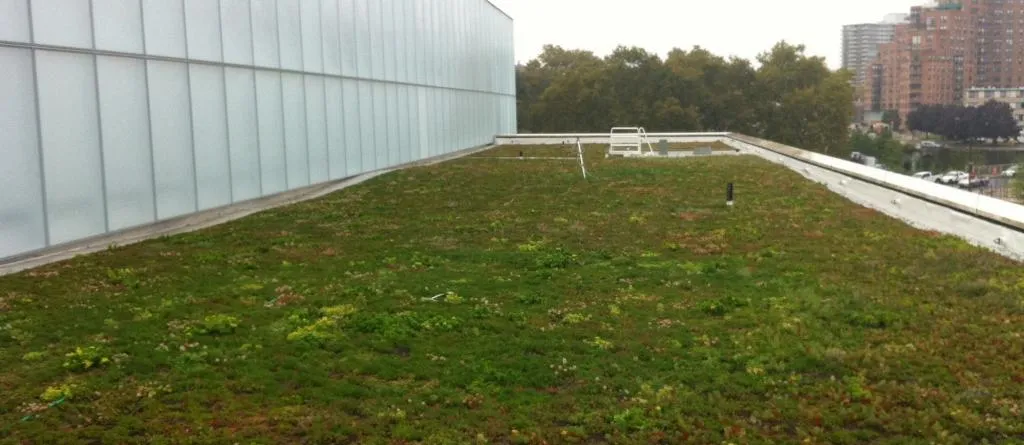
Extensive green roof systems are lightweight assemblies with shallow growing media 6" or less and low-maintenance plantings such as sedums and grasses. They are typically non-accessible and are well suited for projects with limited structural capacity or retrofit conditions. These systems provide stormwater management, thermal benefits, and long-term membrane protection with minimal maintenance.
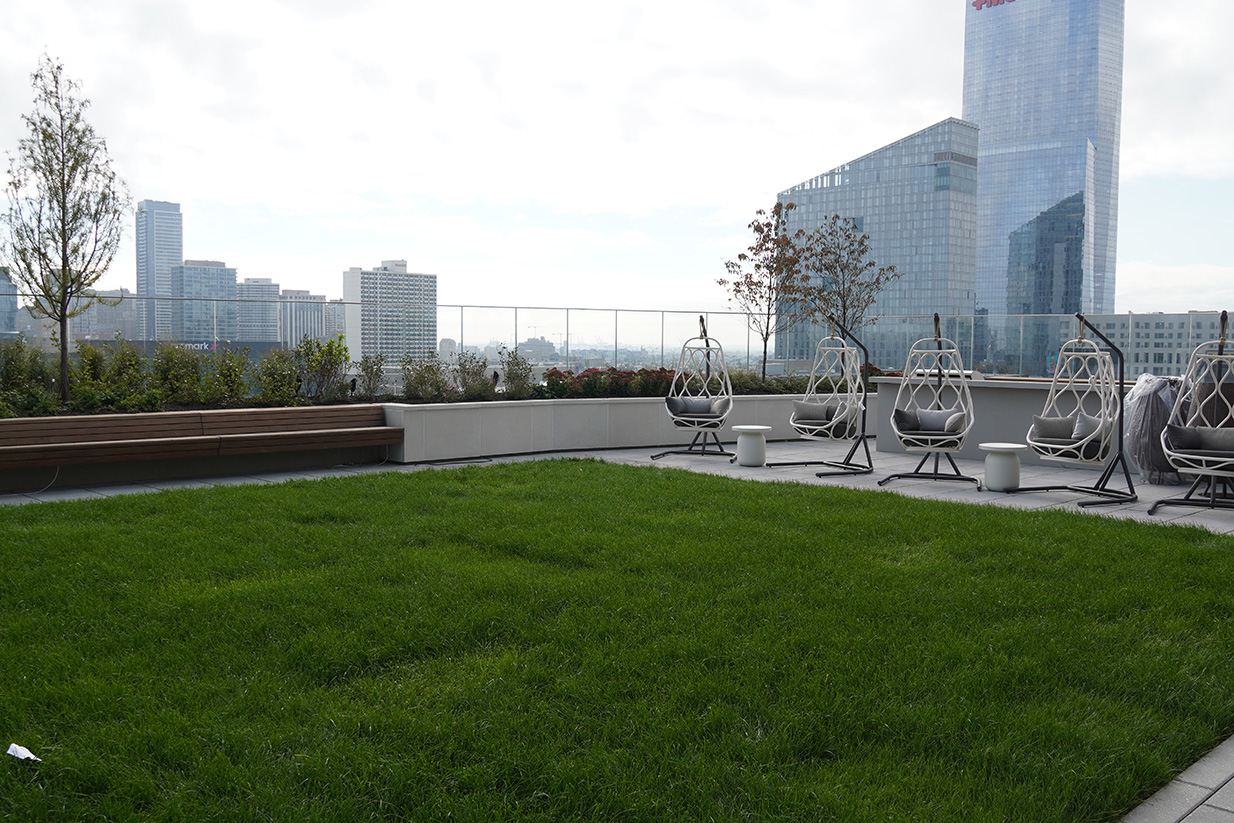
Intensive green roof systems support deep soil profiles greater than 6" depth, including landscaped plantings such as shrubs and ornamental vegetation. Designed as accessible amenity or garden spaces, they provide significant environmental benefits and occupant value. These systems require higher structural capacity, irrigation, and ongoing maintenance.
Sloped vegetated roof systems are engineered to perform on pitched roof conditions where soil stability and drainage control are critical. Specialized retention and reinforcement components prevent erosion while maintaining waterproofing continuity. These systems extend green roof benefits to architecturally expressive roof forms.
%20(1).png)
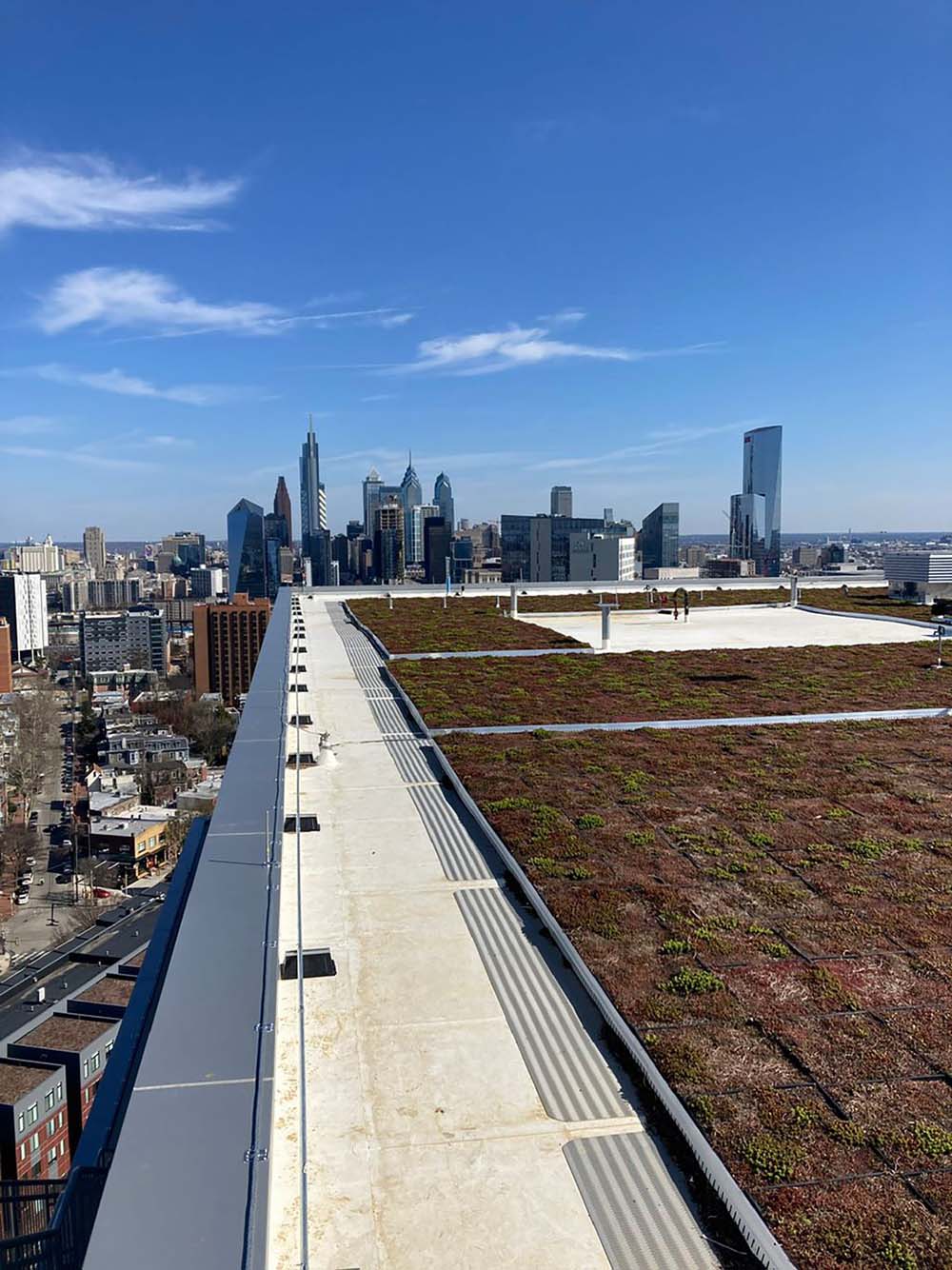
Vegetated tray systems use modular units that integrate drainage, growing media, and vegetation into pre-assembled components. They offer flexibility for phased installation, retrofits, and simplified maintenance access. Tray systems allow design teams to tailor plant selection and system depth to project requirements.
Ready to begin your next project?