10.6.2026
Back Care Starts Before Your Back Hurts
Back care starts before your back hurts. From stretch and flex on the jobsite to movement breaks at your desk, discover simple ways to give your back the attention it deserves.
It is easy to take your back for granted when it feels fine. Then a familiar movement becomes uncomfortable, or getting out of your chair takes a little more effort than it did yesterday.
Suddenly, your back has your attention.
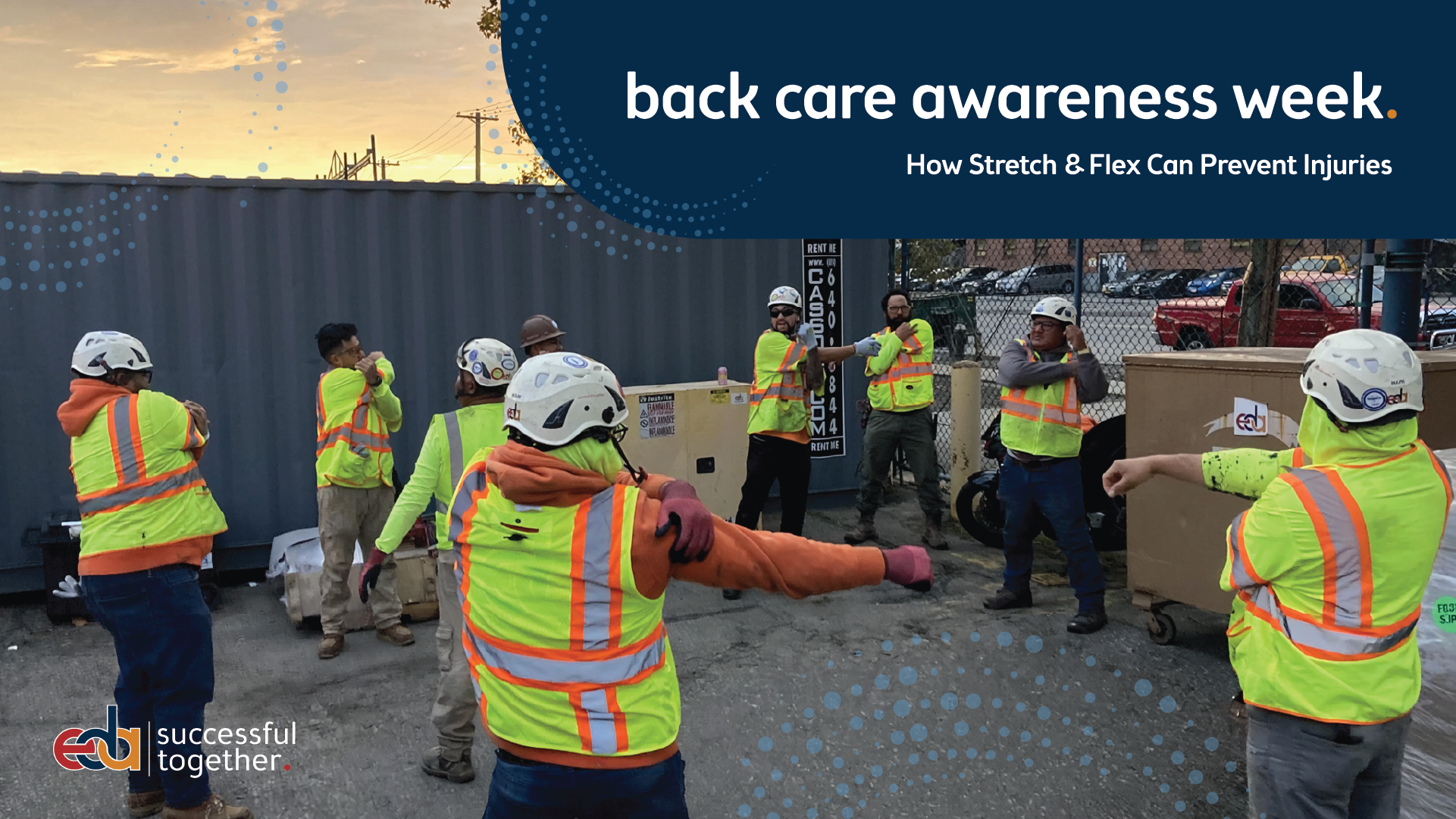
Back Care Awareness Week is a reminder to give it that attention earlier. At EDA Contractors, that conversation includes stretch and flex on the jobsite, but it also reaches the people working behind a desk. The demands may look different, yet everyone benefits from making back care part of their day.
Give Your Body a Chance to Get Ready
The workday may start as soon as you arrive, but your body needs a chance to catch up.
After sleeping or sitting through a commute, jumping straight into physically demanding work can be an abrupt transition. A warm-up gradually increases blood flow and muscle temperature, helping prepare the body for more active movement. Stretching once the muscles are warm can help maintain flexibility.
That is the purpose behind stretch and flex: giving your body time to transition from rest to activity before asking more of it.
On a busy jobsite, those few minutes can be easy to rush through. There are materials to move and work to get started. Taking the routine seriously, though, means treating preparation as part of the job.
Follow the site’s established routine, use controlled movements, and stay within a comfortable range. The goal is to get ready for work, not to see who can stretch the farthest.
Carry That Mindset Into the Work
Stretch and flex is one part of caring for your body. Reducing injury risk also requires attention to how the work is planned and performed.
Before moving a load, consider its weight, where it needs to go, and whether equipment or another person is needed. Keep loads close when handling them, and move your feet to turn rather than twisting while lifting. A warm-up does not make an awkward or overly heavy lift safe.
There is also value in speaking up early. If a task is causing discomfort or a setup requires unnecessary reaching, bring it to the team’s attention. Adjusting how the work gets done can help address the problem before it becomes a bigger concern.
Your Desk Deserves a Safety Check, Too
Back care often brings field work to mind. Office employees can overlook it until they stand up after a long stretch of emails and realize how stiff they feel.
Start with the setup. Does your chair support your lower back? Are your feet supported by the floor or a footrest? Can you reach your keyboard and mouse with your shoulders relaxed?
Posture matters, but even a comfortable position should change throughout the day. Stand up between tasks, take a short walk, or use a phone call as an opportunity to move when practical. Staying absorbed in work should not mean staying in the same position for hours.
Build Support Beyond the Workday
A strong core plays a role in back care for field and office employees alike. The core includes muscles around the abdomen, back, hips, and pelvis that work together to support balance and stability. Strengthening those muscles can make everyday movement easier and may help with some types of back pain.
Regular activity and appropriate strengthening exercises can support that foundation over time. Choose activity that fits your abilities, and seek guidance if you are unsure where to start. If a movement worsens pain, stop rather than pushing through it. Persistent or worsening back pain deserves medical attention.
Make It a Habit
The reason to care for your back extends well beyond finishing a shift. It is about being comfortable enough to enjoy the life waiting after work.
This Back Care Awareness Week, give stretch and flex your full attention. If you work at a desk, start by checking your setup and making room for movement during the day.
Your back helps carry you through work and everything that comes afterward. Give it some care before it has to ask.

Ready to begin your next project?