10.12.2026
More Than Meets the Eye: Careers in Construction
There’s more to a career in construction than meets the eye. This Careers in Construction Month, EDA employees share what people often misunderstand about their roles.
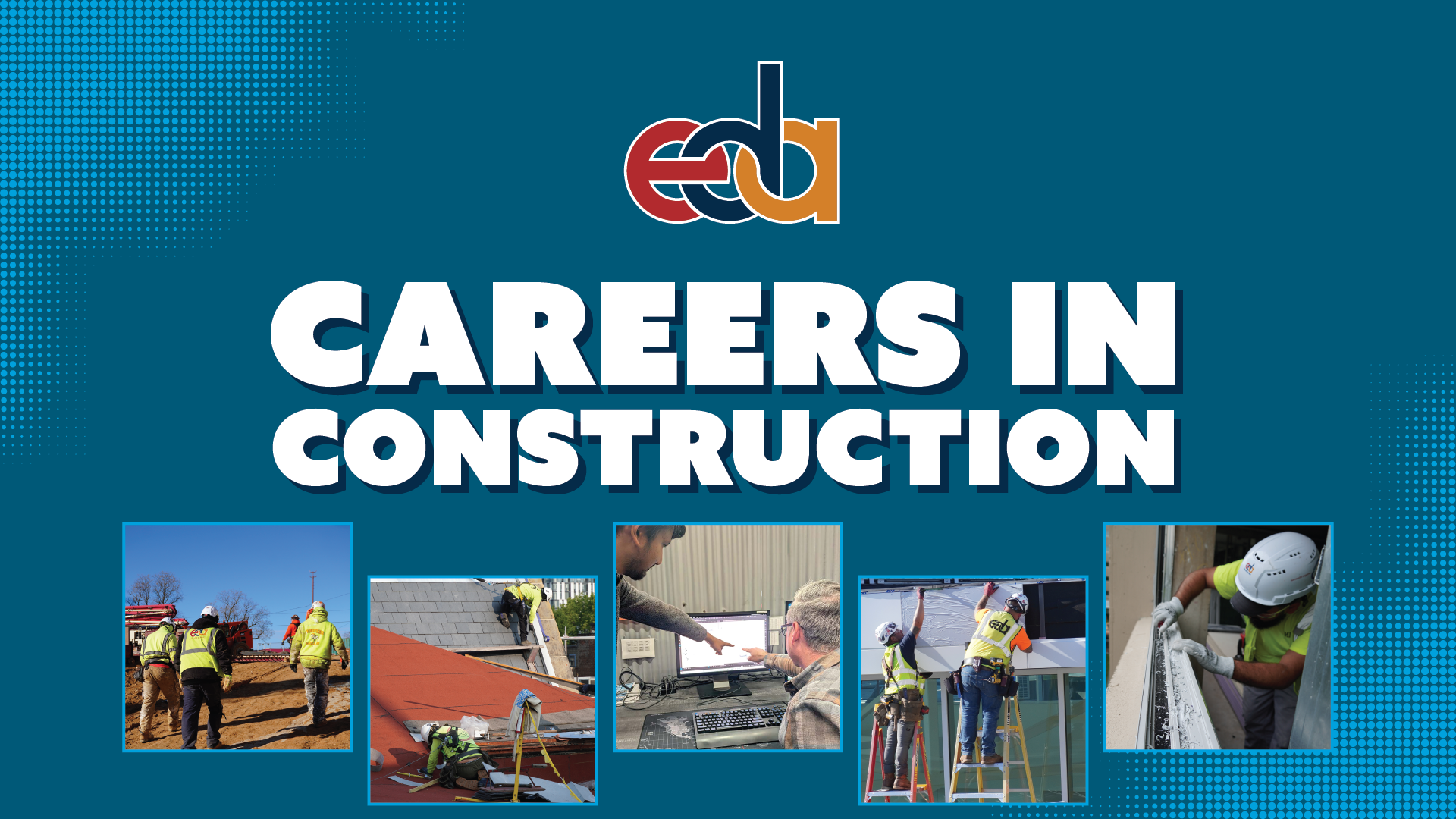
When you picture a career in construction, hard hats, work boots, and high-visibility clothing might come to mind first. But that picture only tells part of the story.
Construction brings together people with different skills and responsibilities. Some estimate projects or develop engineering details. Others manage schedules, support employees, or actually install the systems that protect a building. Each contributes to the work taking shape.
Even the roles people recognize often involve more than they realize.
For Careers in Construction Month, we asked employees what people might be surprised to learn about their jobs. Their answers offer a closer look at the work behind the build.
Working With People is Part of the Job
Supporting construction teams requires understanding the people doing the work. HR Generalist Ethan Nolan explained how his role goes beyond what people often associate with human resources.
“People think HR is just dealing with complaints, but it’s really more about supporting employees, helping managers, hiring, and keeping things running smoothly behind the scenes.”
Those everyday responsibilities help employees get the support they need and allow teams to focus on their work.
Putting a Name to the Work
Sometimes, understanding a construction career starts with learning what the trade actually involves. Glazing Foreman Rich Uslin finds that many people are unfamiliar with his line of work.
“I don’t think a lot of people know what glazing is. I tell people I work on commercial windows, shower doors, storefronts and much more.”
His perspective highlights another opportunity for people exploring construction careers: discovering a specialty or trade they may have seen every day without knowing its name.
Progress Starts Before Installation
Long before crews arrive on a jobsite, work is already underway. Madison Vealey, an EDA engineer, described how much of that preparation goes unseen.
“I think a common misconception is that construction is just physical labor. A lot of people who aren’t in the industry don’t realize quite how much preconstruction work (months and sometimes years) goes on before we ever have boots on the ground.”
Project managers help carry that preparation into the daily progress of a project. Project Manager Ady Tibrewal described responsibilities that include handling submittals and field reports, along with collaborating closely with teams to address technical and logistical challenges.
His role offers another view of construction: keeping information moving and helping teams resolve the issues that affect their work.
That preparation continues once crews are on site. Carpenter Foreman John Melle explained how his responsibilities extend beyond hands-on installation.
“I’m classified as a carpenter, but my role as a foreman at EDA is much more than that. I may not swing the hammer or hang the panels every day, but the planning and coordination that go into a normal day help my team achieve those goals.”
Carpenter Foreman Mike Sherwood echoed the importance of that preparation: “I think people would be surprised by how much preparation and organization go into daily planning.”
Mason Foreman Brendon Potts expanded on what that responsibility looks like.
“It’s definitely more than meets the eye. From the outside looking in, people might think it’s easy or that a foreman just walks around all day. That couldn’t be farther from the truth. We’re always thinking 10 steps ahead, prioritizing safety while trying to be as productive as possible. There’s a lot of planning during and outside of regular work hours. Even when the workday ends, foremen are still mentally engaged.”
The Details Make a Difference
For Carpenter Keenan Tookes, one overlooked part of the job is maintaining the space where the work happens.
“Probably the amount of cleaning that needs to be done and how important it is throughout the day. You might think that on a hectic jobsite, where there’s a lot going on, it wouldn’t matter as much. But having a clean work area and basket makes life a heck of a lot easier and helps you work much more efficiently.”
It’s a reminder that construction depends on more than what gets installed. How people prepare and care for their work area matters, too.
A Broader Picture of Construction
These perspectives offer a starting point for anyone considering a career in construction: look beyond the job title.
Some opportunities are in familiar departments, such as human resources or project management. Others are in specialized trades people may know little about. Even within a recognizable role, the daily responsibilities can be surprising.
Understanding that work can help someone see where their own strengths might fit. An interest in building can open the door to construction, but so can a talent for planning, solving problems, or helping people succeed. Exploring the industry starts with asking what the people behind the build actually do.

Ready to begin your next project?